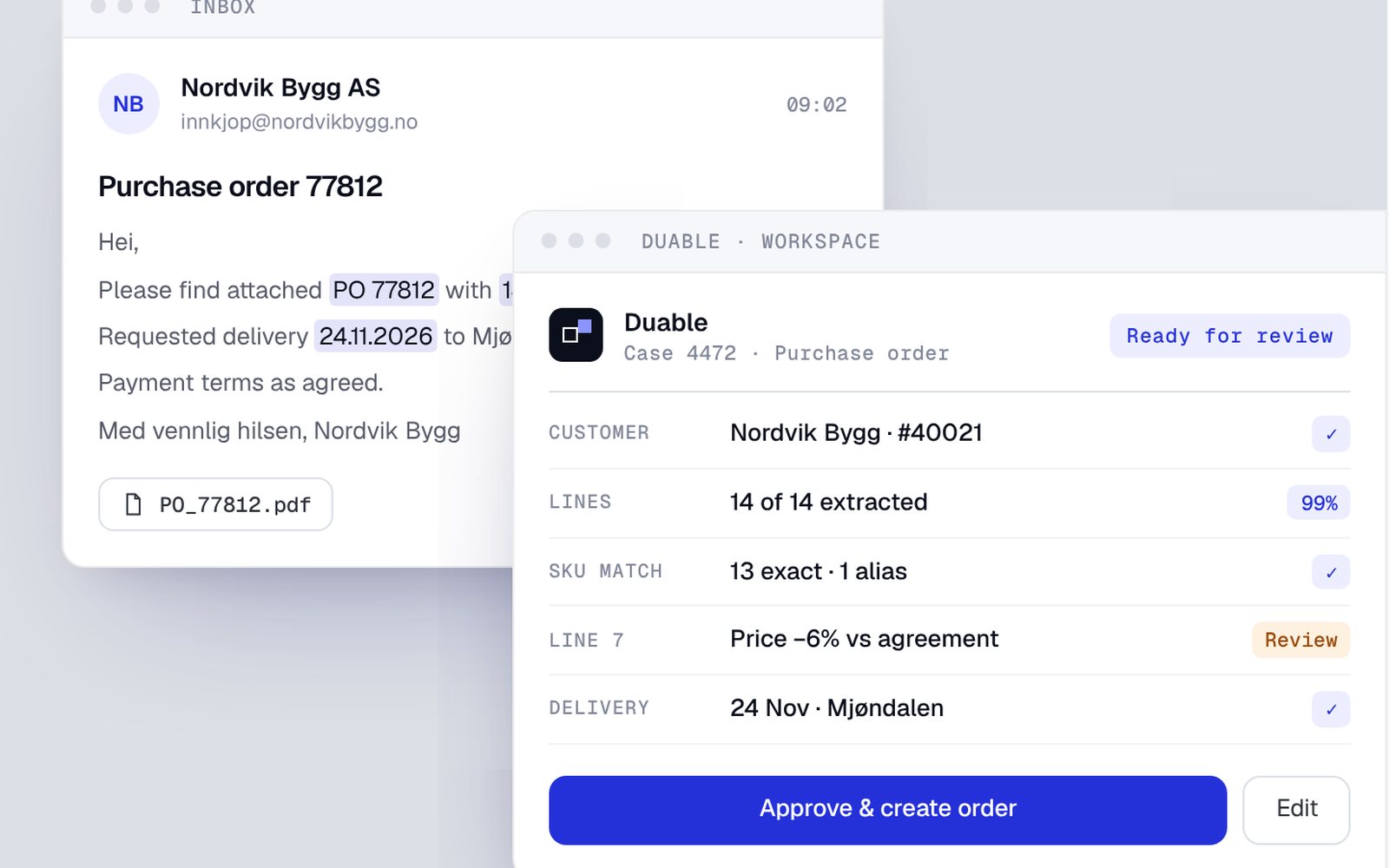
There is a lot of talk about AI right now, and much of it is about big visions. We find it more useful to look at an ordinary Tuesday on an order desk.
Most of the day is reading and keying in
Follow an order desk for a day and it is striking how little of the time goes on decisions. Most of it goes on:
- reading orders that arrive as PDFs, emails, EDI files and portal exports, each in its own layout,
- matching customer item names and numbers to your own master data,
- keying in the same lines in the ERP, and checking prices and delivery dates against agreements.
That work takes attention, but not judgement. And that is exactly where AI is strong.
Where AI helps
Reading. A language model can read an order in any format and find the customer, the lines, the quantities and the dates, even when every customer writes them differently.
Matching. With your master data and agreements, it can match aliases to item numbers and check each line for price, stock and delivery date.
Preparing. The order is created as a draft in your ERP. What doesn't add up is flagged with the reason, so a person can decide instead of searching.
Where AI shouldn't decide
Whether a key customer gets a price exception, whether to split a delivery, or how to handle a line that doesn't match anything are decisions built on experience and relationships. They should stay with your team.
Nothing should go out without a person's approval, until you decide otherwise.
BehdadCo-founder, Duable
Start with one flow
The best way to find out what AI can do on your order desk is to try it on your own orders: let it read and prepare in the background, and compare with what you would have done. You quickly see where it gets things right, and where you still want your hands on the wheel.
Book a free 30-minute AI and automation consultation. We go through your use case and size the value in hours and euros.